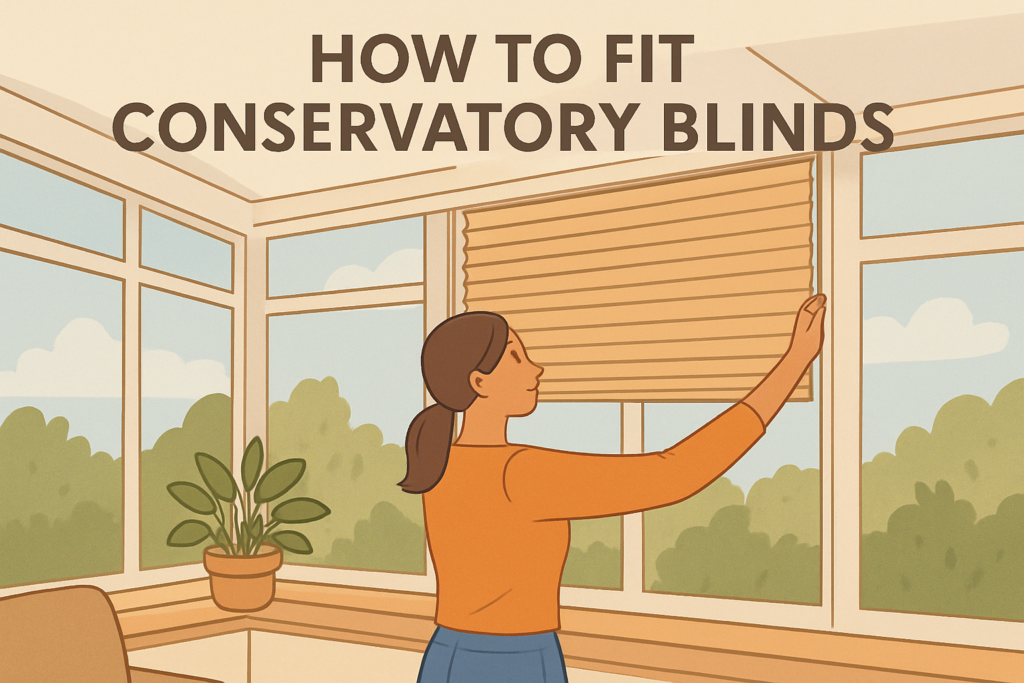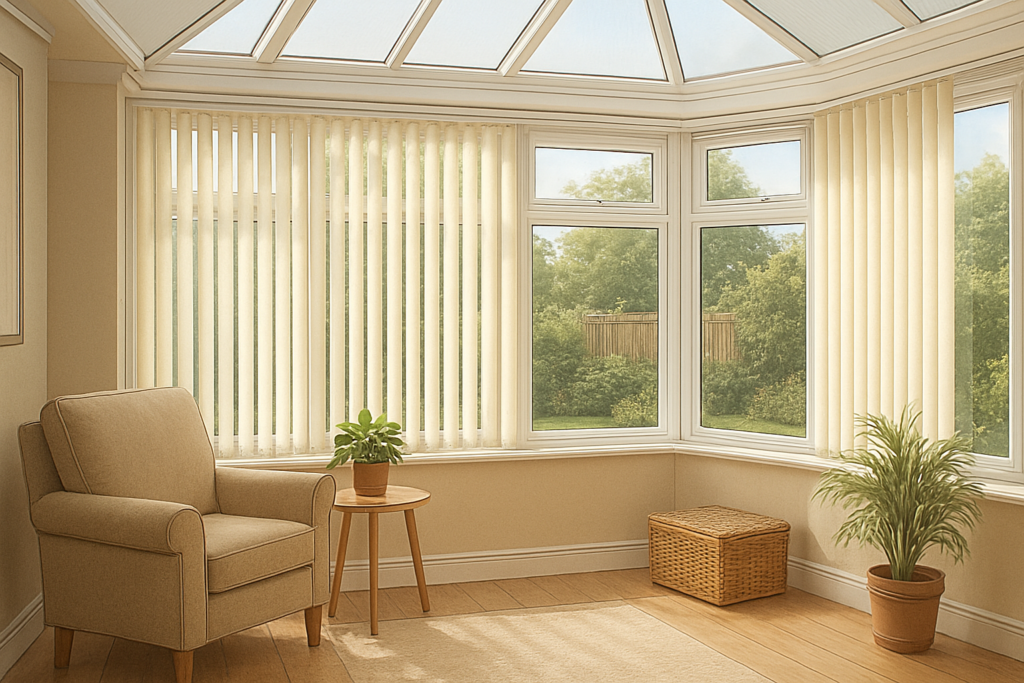
Conservatories can feel like the brightest room in the house, but they also come with unique challenges: strong sunlight, wide temperature swings, and window frames that behave differently to standard home glazing. Venetian blinds are popular because they let you control glare without blocking all the light, and they suit both modern and traditional conservatory styles.
From my experience supporting homeowners with fit-out decisions, most issues aren’t caused by the blind itself—they’re caused by measurements, the wrong fixing approach, or skipping the “small” checks like clearance around handles and vents. Get the basics right and you’ll end up with blinds that open smoothly, sit neatly, and cope well with everyday use.
Why venetian blinds are a great choice for a conservatory
Venetian blinds work especially well in a conservatory because you can fine-tune shade throughout the day. Tilt the slats to bounce light deeper into the room, or close them to protect flooring and soft furnishings from intense sun.
They’re also practical if you use the space as a dining area, home office, or kids’ play zone. Adjustable light control can reduce eye strain, and you can maintain privacy without permanently covering your view.
Key benefits homeowners usually notice
- Glare control: You can reduce harsh reflections from glass while keeping the room bright.
- Ventilation-friendly: You can adjust blinds without fully blocking airflow, which matters around openable sections.
- Flexible style: The fabric and slat finish options can complement uPVC, timber-effect, and aluminium conservatory frames.
- Cost-effective: Compared with some alternatives, venetian blinds often provide strong value for money.
That said, conservatories do introduce extra performance considerations—especially thermal expansion and moisture from condensation. Choosing the right blind design and fitting method helps avoid warped slats, rattles, and poor alignment over time.
Before you fit: measurement checks that prevent 90% of problems
Conservatories vary in shape, frame profiles, and glazing types, so measurement needs to be taken seriously. Measure more than once, and always confirm you’re measuring the part that the brackets will actually sit on—not the glass itself.
If your conservatory sits over uncertain ground conditions or has had base work recently, movement can also affect alignment. If you’re dealing with any structural settling, it’s worth getting the base and drainage basics right first; you may find useful context in how to build a conservatory base.
What to measure for venetian blinds
- Inside or outside fit: Decide whether you’ll mount brackets inside the recess or on the face of the frame.
- Width: Measure at the top and bottom and use the narrowest point for inside mounts.
- Drop/height: Check the full length including any skirting, cills, or obstructions.
- Clearances: Confirm room for window handles, trickle vents, hinges, and any side channels.
- Bevelled or angled glazing: For dwarf wall sections or angled ends, measure each run separately.
Also take note of whether your conservatory has openable lights, roof vents, or side windows. Venetian blinds must not foul moving hardware, and you’ll want a smooth path so the cord or wand doesn’t catch when panels open.
Common measurement mistakes
- Measuring glass instead of the frame: The bracket sits on the frame recess, not on the glazing.
- Assuming frames are perfectly square: Even small deviations cause the headrail to sit skewed.
- Forgetting the bracket “footprint”: Some blinds require more space at the top for bracket arms.
- Not accounting for side channels: Flanking pieces can limit how the blind sits.
Conservatories are often subject to seasonal temperature swings. If your measurements are right on a hot day, the fit can become slightly tight in winter—especially on larger blinds. Leave sensible clearance and avoid forcing anything into place.
Choosing the right mounting method for conservatory frames
The best way to fit venetian blinds in a conservatory depends on your frame material and design. Most issues come from using a fixing method that isn’t compatible with the frame profile, or from drilling without considering what’s behind the surface.
As a practical example, uPVC and aluminium frames differ in how they take screws and how easy it is to achieve a clean, aligned bracket location. If you’re unsure, it’s worth checking the conservatory build details and whether the installer used insulated glazing units or special profiles.
Typical mounting options
- Inside recess mounting: Neat look, but you must have sufficient depth and clearances.
- Face-fix mounting: Useful when the recess is narrow or when you want to avoid tight tolerances.
- Wall or ceiling mounting: Often used for roof lantern sections or when frame mounting isn’t practical.
- Ceiling/soffit mounting brackets: Helpful for larger spans, but alignment is critical.
For conservatories, “face-fix” is frequently the easiest path when recesses are irregular. However, if your frame is angled or has cills, inside mounting can look more tailored—provided measurements are correct and the headrail can move freely.
Drilling versus adhesive fixes
Some blinds come with adhesive pads or require minimal drilling, and those options can be appealing if you want to avoid messing with the frame. Adhesive can work well on clean, dry uPVC or painted surfaces, but it’s less forgiving in condensation-prone environments.
If your conservatory sees heavy condensation, drilling into the frame with appropriate fixings may provide a more reliable long-term hold. Whichever method you choose, avoid fastening into weak or hollow areas and double-check that you won’t hit wiring, insulation, or reinforcement.
What to buy and what to prepare before you start
Buying the blind is only part of the job. Fitting is about having the right tools, understanding how the headrail and brackets connect, and preparing the surface so the blind sits squarely.
If you’ve recently installed your conservatory and want to estimate how long fit-out tasks might take, you may find how long does it take to build a conservatory useful for planning around drying times and settling.
Tools and materials (typical)
- Measuring tape and pencil
- Spirit level (small is fine)
- Drill/driver and suitable drill bits
- Screwdriver
- Marker for bracket positions
- Step ladder (stabilised and suitable for conservatory height)
- Cleaning cloth and degreaser (for adhesive mounting)
- Small screws/anchors that match your frame type
- Safety glasses
Before you begin, protect the glass and frame surfaces with a cloth. Conservatories often have delicate finishes, and it only takes one slipped drill or scuffed profile to make the final look untidy.
Plan the order for multiple windows
If you’re fitting several venetian blinds across a conservatory, work methodically from left to right or top to bottom. Once one blind is fitted, use it as a visual reference for height consistency on the next section—especially on runs that line up across a wall.
Fitting venetian blinds: a practical, conservatory-friendly approach
Fitting venetian blinds should feel controlled rather than rushed. On a conservatory, your biggest enemy is misalignment, so take time to mark bracket positions accurately and check clearance before fully tightening anything.
Where possible, do a dry run with the headrail and brackets. You want to confirm that the blind operates smoothly and that slats clear any window furniture when open.
Step-free workflow (how to do it without rushing)
- Offer up the headrail: Confirm it sits level with the frame and doesn’t foul handles or vents.
- Mark bracket points: Use a pencil and measure from a fixed reference point like a frame corner.
- Check symmetry: A spirit level is essential, but also step back and confirm visually; conservatories can have angles that trick the eye.
- Fix brackets securely: Use the correct screws/fixings for your frame material.
- Install the blind and test operation: Raise, lower, and tilt (if applicable) before making final adjustments.
- Deal with cord/wand routing: Keep it tidy and away from moving window parts.
Handling angled or bay-like conservatory ends
Conservatories commonly include angled sections that create non-straight lines. For those areas, treat each window “face” as its own measurement and fitting job, even if the overall run looks continuous.
It’s also worth considering whether you’ll need separate brackets for each section or longer bracket spacing to keep the headrail parallel. If you try to fit one large blind to cover multiple angles, the alignment will usually suffer and the slats won’t hang consistently.
Ensuring the blind still works when windows open
Openable lights are one of the main reasons conservatory blinds fail to look “installed properly.” If the blind catches the opening sash or shifts when the window moves, it will eventually wear the cord or make the blind hard to use.
When you test, open the window fully and operate the blind at the same time. If you notice friction at the headrail, pause and adjust bracket position rather than forcing the mechanism.
Heat, condensation, and movement: getting a stable fit in UK conservatory conditions
Conservatories can swing from chilly winter mornings to hot afternoons surprisingly quickly. Venetian blinds—especially those with ladder cords, bead chains, or wand mechanisms—need room to work without straining.
Condensation is also common, and it can make surfaces slightly damp. If your fitting uses screws or adhesive, the moisture issue needs to be considered so your brackets stay secure.
How to reduce seasonal fit problems
- Don’t over-tighten: Brackets that are forced can shift slightly as temperatures change.
- Allow gentle clearance: Avoid having the headrail pinch against frame trim.
- Wipe moisture before adhesive mounting: Adhesives bond poorly to damp surfaces.
- Choose conservatory-appropriate materials: Aluminium and quality polymers often cope better than flimsy components.
If you’ve noticed condensation-related issues, it’s also worth thinking about ventilation improvements. Even the best-fitting blinds can’t compensate for persistent damp inside the frame area.
Limitations to be aware of
Venetian blinds are excellent for light and privacy control, but they can be less ideal if you’re trying to fully block heat. For some conservatories, especially those that run warm in summer, you might also consider thermal linings or alternatives that offer better insulation.
Also, very large spans can sag if the headrail or fixings aren’t rated appropriately. On big glazing areas, choose a blind designed for the width and use appropriate bracket strength.
Finishing touches: make it look neat and keep it working well
After the blind is fitted, the difference between “good” and “great” is how tidy it looks and how smoothly it operates. Small adjustments can prevent rattles and uneven slat alignment.
In conservatories, the finishing details matter because the room’s brightness makes imperfections more noticeable.
What to check once the blind is installed
- Level headrail: The slats should hang evenly without twisting.
- Operation is smooth: Raise/lower and tilt actions should be free of grinding.
- No slat catching: If slats overlap unevenly, check that the headrail is centred and the brackets are aligned.
- Cord safety and routing: Keep control cords clear of window movement and within safe reach rules.
- Trim and cover pieces: Use end caps or cover brackets to hide screw heads neatly.
If you’re fitting blinds in a conservatory used by children, be extra careful with cord length and accessibility. Consider cordless options if you have concerns, and always follow the manufacturer guidance for safe installation.
Troubleshooting common conservatory fitting issues
Even with good measurement, you may encounter small snags. The key is diagnosing the cause early, rather than adjusting repeatedly in the dark.
Headrail won’t sit level
Check whether the frame face is actually level. Conservatory frames can be slightly out due to the original build tolerances. Adjust the bracket position or use packing shims (if recommended by the blind supplier).
A quick check is to compare the headrail level against a known reference like a door frame line, not just the conservatory frame trim.
Blind tilts but slats don’t close neatly
This often points to bracket alignment or uneven mounting height. When one bracket is fractionally off, slats can meet at a slight angle.
Loosen brackets slightly and re-centre. If the mechanism feels stiff, don’t force it—forced tilting can damage ladder cords over time.
Cord/wand fouls window furniture
Conservatories have many moving parts, and it’s common for cords to interfere when the window opens. Re-route the cord/wand and confirm there’s no contact at full opening.
In some cases, you may need different bracket spacing or a different blind control position.
Loose brackets after a few weeks
Loose brackets can happen if fixings weren’t suited to the frame material. If you used adhesive, check whether condensation was present during application.
Re-secure brackets with appropriate screws or compatible fixings. If you’re unsure about the right fixings for your frame, a conservatory installer can usually advise quickly based on the frame type.
Where local conservatory context can help
Every conservatory is different, and local conditions matter too. In colder or windier areas, temperature swings and condensation can be more noticeable, which influences how carefully you should check clearances and fixing security.
If you’re planning your wider conservatory work and want to think through the build and finish, it can be helpful to review installation context for your region. For example, homeowners in Liverpool conservatory installation considerations sometimes encounter different build styles and frame finishes that affect what looks neat and what fixes securely.
Similarly, if you’re assessing overall installation details before you fit interior blinds, regional guidance can help you avoid surprises later.
What We Get Asked… about fitting venetian blinds in a conservatory
Do I need special venetian blinds for a conservatory?
Not always, but it helps to choose blinds designed for window installations and suitable for temperature swings. If your conservatory experiences heavy condensation, look for quality components and mounting hardware that tolerates damp conditions.
Should I drill into uPVC conservatory frames?
Often yes, but only with appropriate fixings and careful positioning. Drilling into the wrong profile can weaken the frame, and drilling where there’s reinforcement or hidden parts can be risky.
Can I fit venetian blinds to glazed doors and openable windows?
Yes, but you must ensure the control mechanism and headrail don’t foul the opening sash. Always test the blind operation with the window fully open before finalising any alignment.
Why do my blinds feel stiff in winter?
Thermal contraction and condensation can make moving parts tighter or slightly damp. Keep the headrail level, avoid over-tight brackets, and check that slats move without friction.
How do I keep cords tidy and safe in a conservatory?
Use any cord tidy clips supplied and route cords away from hinges and handles. For homes with children, follow the manufacturer safety guidance and consider alternatives if you’re concerned about accessible cords.
Our Final Thoughts
Fitting venetian blinds in a conservatory is very achievable if you treat measurements and bracket positioning as the main job. When the headrail sits level, controls clear moving window parts, and fixings suit the frame material, your blinds will look crisp and operate smoothly through the seasons.
If you’d like a confidence boost before you order, double-check whether your measurements are from the frame face, not the glass, and decide whether inside or face-mounting suits your conservatory best. For additional context on getting the overall conservatory build right—especially the base and structural details—see whether you need foundations for a conservatory.
Ready to move forward? Take a tape measure to each window section, note any handles or vents, and then choose venetian blinds that match the span and mounting type. When you’re ready, fit one blind first and test operation thoroughly before repeating the process across the rest of the conservatory.