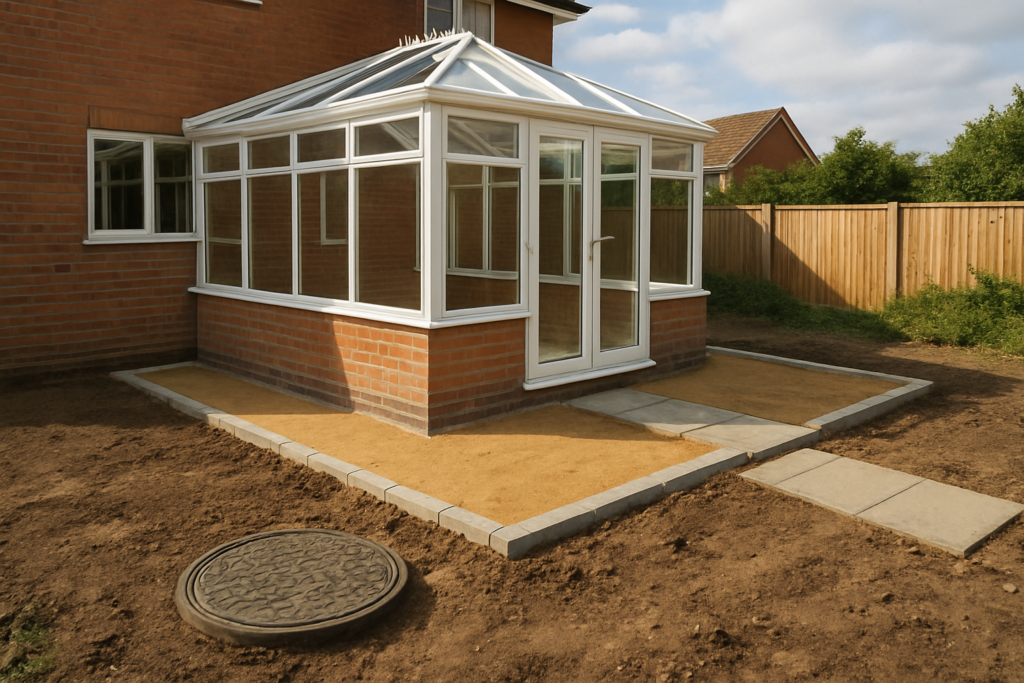
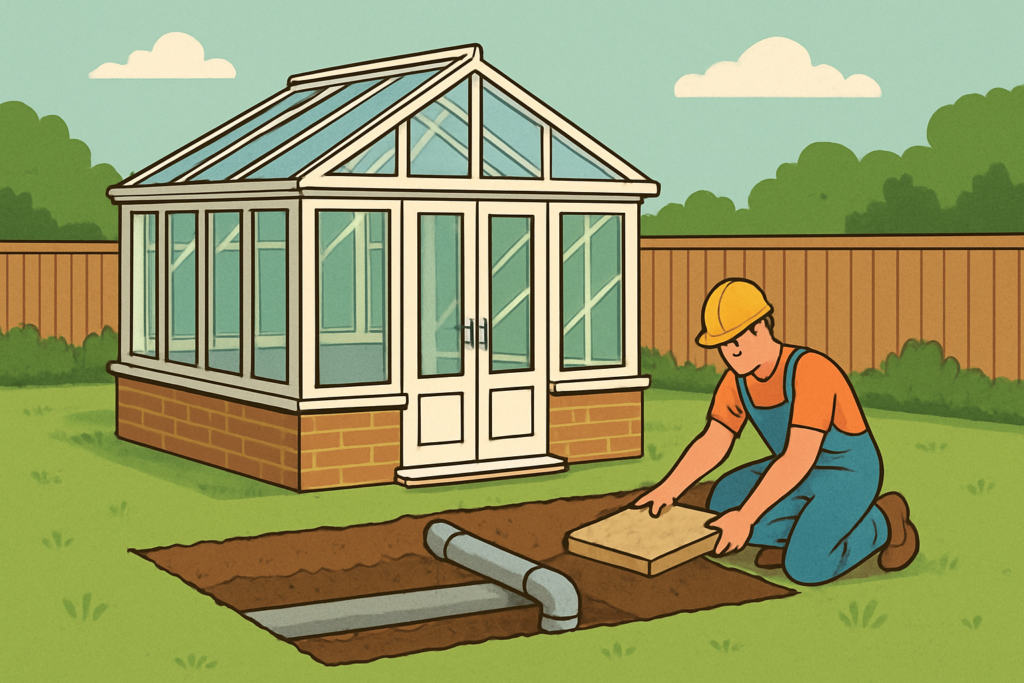
Building a conservatory base is a foundational step that can significantly impact the durability and aesthetics of your conservatory. This integral part not only provides structural support but also ensures proper insulation and stability. Getting the base right involves careful planning, consideration of local regulations, and the right materials.
Understanding the Importance of a Solid Conservatory Base
A strong conservatory base is essential for a variety of reasons. It acts as the bedrock on which your conservatory is built, so both strength and durability are paramount.
Having a well-constructed base prevents issues such as:
- Structural instability, which can lead to safety concerns.
- Water ingress, which may damage your conservatory over time.
- Heat loss, making your space less energy-efficient.
Understanding these factors highlights the need for a base that can withstand local weather conditions and suit the design of your conservatory.
Common Mistakes To Avoid
Building a conservatory base is not without its pitfalls. By being aware of common mistakes, you can navigate the process more smoothly.
Not Researching Local Regulations
Each area may have different regulations regarding foundations. Failing to comply can result in fines or the need to demolish your conservatory.
Ignoring Soil Quality
The type of soil on your property can influence the type of base required. Poor soil might necessitate additional support measures. Always conduct a soil test prior to beginning your build, as this will inform the design and materials you’ll need.
Underestimating Size and Design
Many homeowners underestimate the size or overestimate how much weight the base will need to support. This can lead to significant problems down the line, including costly repairs. It’s crucial to have not just an accurate assessment of the conservatory size but also to account for additional weight from furnishings.
Planning Your Conservatory Base
Before breaking ground, planning is essential. Considerations include size, design, material, and location.
Size and Layout
Measure the footprint of your conservatory carefully. Take note of any landscaping or features nearby that could impact the build. A detailed blueprint can help visualise this.
Choosing the Right Materials
The materials you select can vary widely based on your budget and structural needs. Common materials include:
- Concrete blocks: Durable and suitable for most climates.
- Brick: Offers excellent insulation but can be more costly.
- Pre-cast elements: Quick to assemble but often requires crane-access.
Consulting with a professional builder who has experience in conservatory constructions can save you time and money in the long run.
Preparing the Site
Once your plans are set, the next step is to prepare the site. This process involves:
Clearing the Area
Remove any debris, plants, or structures that could obstruct the build. Make sure you also check for underground utilities before digging. It might help to hire a professional locator service for utilities to avoid accidents.
Excavation
Depending on your soil type and design, you may need to dig down to a suitable depth. Generally, a depth of 30cm to 40cm is adequate for a standard base. However, bear in mind that some regions may require deeper foundations based on local guidelines.
Once excavated, the area should be compacted to form a solid foundation. Utilising a plate compactor can make this job more efficient.
Building the Conservatory Base
With a prepared site, you can begin actual construction. This section will guide you through the process.
Laying the Foundations
If you’re opting for a traditional concrete base, a minimum thickness of 10cm is advisable. Pour the concrete and allow it to set, ensuring it’s level. You may also want to create a slight slope to aid drainage.
Constructing the Walls
For a robust and insulated base, construct walls using your chosen material. Make sure they are adequately braced and anchored to ensure stability. Pay attention to make sure that the walls are plumb and level before the mortar sets.
Incorporating Drainage
Effective drainage is vital. Install drainage channels around the base to divert water away from the structure. This can prevent potential building issues caused by water accumulation. Ensure the drainage system connects to the local stormwater management system.
Insulation and Finishing Touches
After the structural elements are in place, insulation can enhance energy efficiency.
Insulating the Base
Use insulation boards on the interior sides of the walls. This will aid in temperature regulation, making your conservatory a comfortable space year-round. Opting for insulated concrete forms can provide dual benefits: structural integrity and insulation.
Finishing the Base
Finishing touches include waterproofing layers, such as membranes that prevent moisture ingress, and creating a polished surface for aesthetic purposes. Make sure to use high-quality sealants that are designed for exterior applications to ensure longevity.
Benefits of a Well-Built Conservatory Base
A well-constructed base offers numerous benefits that enhance your conservatory experience.
- Improved longevity: A strong base supports the conservatory for years.
- Increased energy efficiency: Insulation maintains temperature, reducing heating costs.
- Greater resale value: A professionally built conservatory can significantly boost your home’s market value.
For a comprehensive understanding of the benefits conservatories offer, you may wish to check out our guide on building a conservatory.
What We Get Asked…
How long does it take to build a conservatory base?
The timeframe varies depending on the size and complexity of your conservatory. Generally, expect several days to a week for the base alone. Larger or more complex designs may require additional time.
Do I need planning permission?
This depends on your local council and regulations. Typically, if you’re building a conservatory that exceeds certain dimensions, you may need permission. Always check with your local planning office to confirm.
Can I build the base myself?
While it’s possible, unless you have experience, hiring a professional is advisable. They can ensure that the base meets all safety standards. Moreover, mistakes made during construction can be costly to fix later.
Future Steps After Completing Your Base
Once your base is complete, it’s time to move onto the next phases of your conservatory project. Selecting a suitable design and hiring skilled installers are crucial. Be sure to evaluate contractors closely to guarantee they understand your vision and build needs.
If you’re situated in areas like Nottingham or Bristol, consider consulting local experts who specialise in conservatory installation. Their insights can streamline the overall process and provide you with valuable tips based on regional practices.
Our Final Thoughts
A well-planned and constructed conservatory base lays the groundwork for a successful project. With the right approach, you can create a beautiful, functional space that amplifies the appeal of your home.
For those interested in enhancing their living space with a conservatory, consider reaching out to local conservatory services, like those in Nottingham or Bristol. You’re one step closer to realising your dream conservatory!