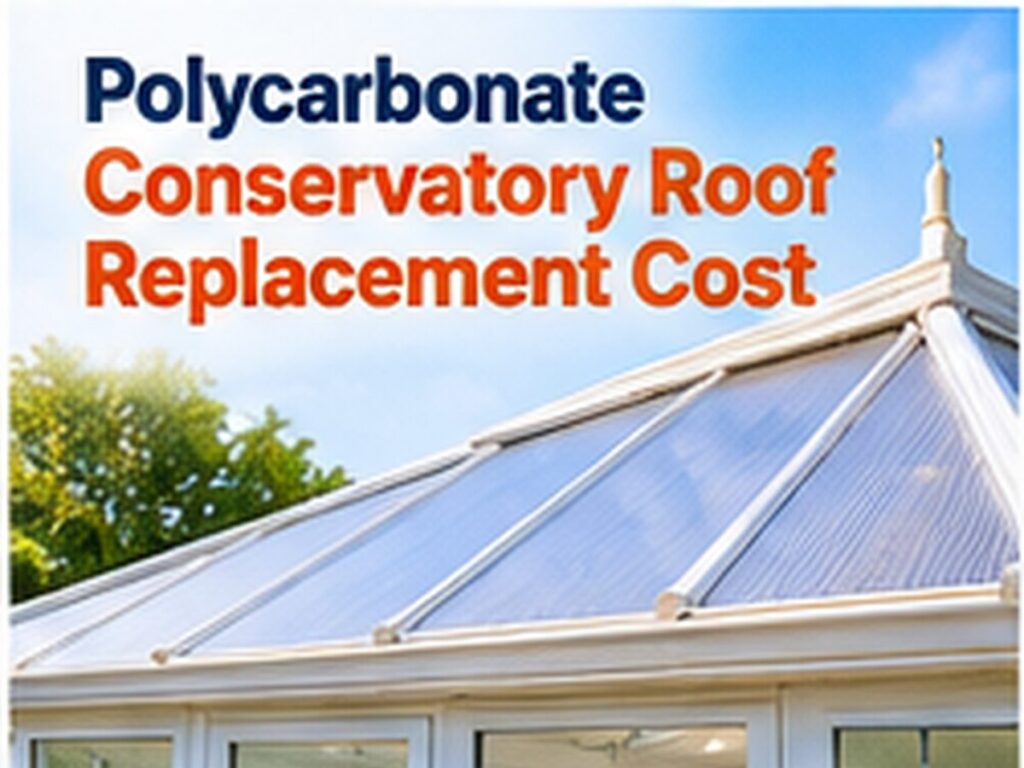
Replacing a polycarbonate conservatory roof can cost anywhere from around £2,500 to £8,000 for many standard UK conservatories, although smaller roofs may fall below this range and larger, more complex projects can cost considerably more. The final price depends on the roof area, design, access, the condition of the existing frame and whether you are replacing like for like or upgrading to glass, tiles or an insulated system.
Polycarbonate remains a popular roofing material because it is relatively light, economical and straightforward to install. However, an old roof can become scratched, discoloured, draughty or noisy, and a replacement is often considered when the conservatory is too hot in summer and too cold in winter.
A reliable quotation should cover more than the roofing sheets. It should account for trims, glazing bars, fixings, flashing, removal and disposal, access equipment, labour and any repairs needed before the new panels are installed.
Typical Polycarbonate Conservatory Roof Replacement Cost
For budgeting purposes, a small lean-to conservatory may cost approximately £2,000 to £3,500 for a replacement polycarbonate roof. A medium-sized Victorian, Edwardian or gable conservatory often falls between £3,000 and £5,500, while a large or complicated roof can reach £6,000 to £8,000 or more.
These figures are broad guide prices rather than fixed tariffs. Some contractors quote by roof area, while others price the project as a complete package. A roof with several facets, valleys or unusual angles generally takes longer to measure, manufacture and fit than a simple rectangular lean-to.
- Small conservatory: roughly £2,000–£3,500.
- Medium conservatory: roughly £3,000–£5,500.
- Large or intricate conservatory: roughly £5,000–£8,000 or more.
- Individual panel replacement: often several hundred pounds, depending on access and matching requirements.
Prices may include VAT, but this is not always the case. Ask each installer to state clearly whether VAT, scaffolding, waste disposal and internal protection are included so that you can compare quotations fairly.
What Affects the Replacement Price?
The dimensions of the roof are the obvious starting point, but they are not the only factor. Two conservatories with a similar footprint can have noticeably different replacement costs because of their roof shape, height and construction.
Roof design and size
Victorian and Edwardian roofs contain multiple sloping sections, while gable-ended designs may require more detailed trims and junctions. Lean-to roofs are usually simpler, although restricted access against a neighbouring wall can make installation more difficult.
The pitch also matters. Steep roofs can require specialist access equipment and additional safety precautions. A roof that cannot be reached safely from a ladder may need scaffolding or a mobile access tower, adding to the labour bill.
Panel specification
Polycarbonate sheets are available in different thicknesses, tints and structures. Multiwall panels generally provide better insulation than basic twin-wall sheets, while opal or tinted options can reduce glare and solar gain. Thicker or more advanced panels cost more, but may improve comfort and durability.
Some homeowners request clear panels to maximise daylight, whereas others choose an opal finish because it diffuses strong sunlight and helps hide dirt. Your installer should explain how the proposed specification affects light transmission, heat control and appearance.
Condition of the existing roof frame
A new roof can only perform properly if the supporting framework is sound. Rotten timber, corroded aluminium, damaged crestings, distorted rafters or failed seals may need attention before the panels are fitted.
Minor repairs may add a few hundred pounds, but extensive frame damage can change the project completely. If the structure is no longer suitable, a full roof replacement or wider conservatory roof conversion may be more sensible than installing new panels onto a failing base.
Removal and disposal
Old polycarbonate panels must be removed carefully, particularly where they have become brittle or where sealed units are incorporated into the roof. Disposal, loading and transport are normally included in a professional quotation, but they should still be shown as a separate line so you know what you are paying for.
Access and location
Narrow side passages, conservatories attached to extensions and roofs above awkward boundaries can increase the time required. Regional labour rates also vary, with prices often higher in London and parts of the South East than in other areas.
For a broader look at the structural issues involved in conservatory projects, it is useful to understand how to construct a conservatory, including foundations, roof support and ventilation.
Should You Replace Every Panel or the Entire Roof?
Replacing one or two damaged panels can be cost-effective when the rest of the roof is in good condition. It may resolve a local leak or repair damage caused by impact without disturbing the entire structure.
However, patch repairs are less attractive when multiple sheets are faded, cracked or leaking. Older panels may no longer match the colour or profile of newer replacements, and seals can fail in several places at once. In that situation, a complete replacement usually delivers a more consistent result.
Individual replacement is most suitable when:
- Damage is limited to a clearly identified area.
- The existing panels are still relatively clear and structurally sound.
- Matching sheets and compatible glazing bars are available.
- The roof frame and supporting seals remain in good condition.
A complete roof is usually preferable when the panels are more than a decade old, the conservatory is uncomfortable throughout the year, or repeated repairs have failed to stop water ingress. Before agreeing to a panel-only repair, ask whether the installer can guarantee a watertight result and whether the replacement will match the existing profile.
What Is Included in a Professional Quote?
A detailed quotation should describe the work rather than simply provide a single total. This gives you a useful basis for comparing installers and helps prevent unexpected extras during the project.
- Site survey and measurements.
- Removal of existing polycarbonate panels and trims.
- Supply of the specified replacement sheets.
- New glazing bars, end caps, seals and appropriate fixings.
- Flashing or weatherproofing at the house connection.
- Minor repairs to the existing roof framework, if agreed.
- Labour, access equipment and waste disposal.
- Final cleaning and checks for water tightness.
Not every quote includes internal making-good. Removing old panels can disturb plaster, paintwork or trim around the edge of the roof, so establish whether any damaged finishes will be repaired or whether that will be your responsibility.
It is also worth asking about guarantees. A reputable installer should be able to explain the manufacturer’s product warranty and their own workmanship guarantee. These are separate protections, and a panel warranty may not cover installation faults or leaks caused by poor detailing.
Polycarbonate Roof Replacement Versus Other Options
Like-for-like polycarbonate is normally the lowest-cost roof replacement option, but it is not automatically the best choice for every household. Consider how you use the room, how long you expect to stay in the property and whether summer overheating or winter heat loss is the main concern.
Glass roofs
Modern conservatory glass can offer excellent clarity, a more permanent appearance and coatings designed to reduce solar gain. It is usually heavier and more expensive than polycarbonate, and the supporting structure may need to be checked carefully before installation.
Solid or tiled roofs
An insulated solid roof may make the room feel more like a conventional extension. It can reduce glare and improve thermal comfort, but it changes the appearance and may require additional structural assessment. You can compare the alternatives in this overview of replacement conservatory roof options.
Insulated polycarbonate systems
Some replacement systems use improved multiwall polycarbonate, reflective coatings or additional insulation beneath the panels. These can provide a useful middle ground where you want better comfort without the weight and cost of a fully solid roof.
Do not choose solely on the cheapest initial figure. A lower-cost roof that still leaves the room unusable in extreme weather may offer poorer value than a better-specified system. Equally, an expensive conversion may be unnecessary if your main problem is a few failed panels and worn seals.
Common Mistakes That Increase the Cost
One common mistake is requesting a quote before the roof has been properly measured. Conservatory roofs are rarely as simple as their floor dimensions suggest, and overlooking a section, valley or house-wall junction can lead to revisions later.
Another is assuming that a leak always comes from a damaged panel. Water can enter around crestings, flashing, roof vents, gutter connections or failed sealant. Replacing panels without identifying the source may only provide a temporary improvement.
Homeowners can also underestimate ventilation. A new roof may reduce draughts, but the conservatory still needs suitable airflow to manage condensation and summer heat. Ask whether existing roof vents, opening windows or trickle ventilation should be retained or upgraded.
Finally, avoid choosing an installer based on a low headline price alone. Check that the company has experience with your conservatory design, provides a written specification and can show examples of comparable work. Clear communication before the contract is signed is often a good indicator of how issues will be handled during installation.
How to Keep the Project Within Budget
Start by deciding whether your priority is repair, comfort, appearance or a complete change of use. This prevents you from paying for upgrades that do not solve the actual problem.
Obtain at least three written quotations, but compare the specifications rather than just the totals. One installer may quote for basic twin-wall sheets, while another includes thicker multiwall panels, new trims and improved ventilation.
Ask for a breakdown of optional items. Solar-control panels, upgraded insulation, internal pelmets and decorative finishes may be worthwhile, but separating them from essential work makes it easier to control the budget.
Timing can make a difference as well. Discuss availability outside the busiest spring and summer period, although you should not delay urgent work if the roof is allowing water into the structure. Protect furniture and flooring while waiting, and deal with leaks promptly to limit damage to plaster, electrics and flooring.
Regular cleaning can also extend the useful appearance of the new roof. Practical advice on how to clean a conservatory roof can help you avoid abrasive products and unsafe access methods that may damage the panels.
Does Replacing Polycarbonate Improve Thermal Comfort?
A new roof can improve comfort when the existing panels are damaged, poorly sealed or thermally inefficient. Better-quality multiwall polycarbonate reduces heat transfer more effectively than older basic sheets, while tinted or opal panels can help control intense sunlight.
It is important to keep expectations realistic. A conservatory has a large glazed area and may still become warm in direct summer sun or cool quickly during winter evenings. Wall glazing, doors, flooring, ventilation and heating all influence the finished result.
Ask the contractor to explain the panel’s U-value, light transmission and solar-control properties rather than relying on vague claims about being “fully insulated”. If thermal performance is your main reason for replacing the roof, consider whether additional conservatory roof insulation would be appropriate for the proposed system.
What We Get Asked…
How long does a polycarbonate conservatory roof last?
Quality polycarbonate panels can last for many years, but their service life depends on exposure, installation quality, cleaning and the condition of the seals. Cloudiness, brittleness, cracks and persistent leaks are signs that inspection or replacement may be due.
Can I replace polycarbonate with glass?
In many cases, yes, but the frame must be assessed for the additional weight and the roof design must be suitable. Glass replacement is not simply a matter of ordering panes of the same size, so obtain a structural assessment and a detailed specification.
Do I need planning permission for a replacement roof?
A like-for-like roof replacement will often not require planning permission, but changing the roof structure, height or overall character can alter the position. Building Regulations may also apply, particularly where the replacement significantly changes insulation or the conservatory’s relationship with the house. Ask your installer what approvals are relevant to the proposed work.
Can a conservatory roof be replaced in winter?
Yes, although weather can affect working conditions and the time the room is temporarily exposed. A professional team should use suitable coverings and plan the installation so the building is protected between removing the old roof and fitting the new one.
Our Final Thoughts
The typical polycarbonate conservatory roof replacement cost is influenced by far more than the price of the panels. Roof size, design, access, supporting framework, insulation specification and the level of finishing work can all move the final figure significantly.
Begin with a proper survey and decide whether a targeted panel repair, a like-for-like replacement or a different roofing system best suits the way you use the room. Then compare detailed quotations that explain materials, labour, access, disposal, guarantees and any likely repairs.
If your existing roof is making the conservatory uncomfortable or allowing water inside, arranging an assessment is the sensible next step. A specialist can identify the cause of the problem and recommend a proportionate solution rather than simply replacing materials that may not be at fault.