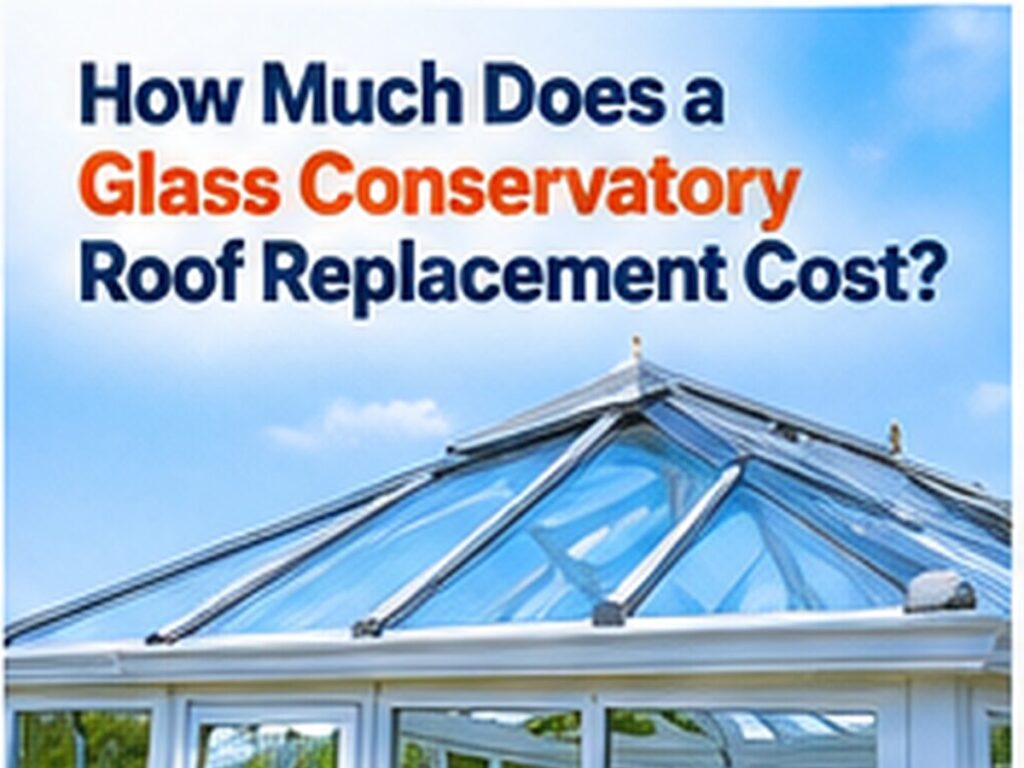
Replacing a glass conservatory roof typically costs between £4,000 and £12,000 in the UK, although smaller roofs may cost less and large, complex designs can exceed this range. The final price depends on the roof’s size, the type of glass selected, the condition of the existing framework, access to the property and the amount of remedial work required.
A replacement roof can make a conservatory more comfortable, quieter and easier to use throughout the year. It can also resolve problems such as failed double glazing, leaks, draughts, excessive summer heat and condensation, but it is important to establish whether the glass alone needs replacing or whether the entire roof system has reached the end of its useful life.
As a specialist cost guide, we recommend obtaining quotations based on a proper survey rather than relying solely on a price per square metre. A surveyor or experienced installer should inspect the glazing bars, roof vents, seals, gutters, supporting walls and connections before confirming the specification.
Typical glass conservatory roof replacement costs
The table below gives useful starting estimates for a complete replacement using modern double-glazed conservatory roof glass. These figures are broad UK estimates and may vary according to regional labour rates, VAT, access and the chosen specification.
- Small lean-to roof: approximately £3,500 to £6,000.
- Medium Victorian or Edwardian roof: approximately £5,000 to £9,000.
- Large or complex conservatory roof: approximately £8,000 to £14,000 or more.
- Replacement glass panels only: often £1,500 to £5,000, depending on the number and size of panels.
- Roof glass upgrades or additional ventilation: commonly £500 to £2,000 on top of the main installation.
A roof replacement involving only a few failed units is substantially different from removing every panel, upgrading the roof structure and installing new flashing. Make sure quotations clearly state whether they cover the complete roof, individual panes, trims, vents, gutters, scaffolding, disposal and finishing work.
For a broader understanding of available systems, compare the options described in our guide to a replacement conservatory roof. A glass roof is not always the only suitable solution, particularly where the existing room suffers from poor insulation.
What affects the cost of replacing a glass roof?
Roof area is one of the most obvious cost factors, but it is not the only one. A larger roof requires more glazing, longer installation time and potentially stronger handling equipment, while unusual shapes can create additional measuring and manufacturing costs.
The roof design also matters. A simple lean-to roof may be relatively straightforward, whereas a Victorian, Edwardian, gable-ended or P-shaped conservatory can include many individually sized panes and complicated junctions. More panes mean more seals, cappings and opportunities for small installation details to affect the final result.
The condition of the existing roof framework should be assessed carefully. Rotten timber, corroded aluminium, damaged PVCu profiles, distorted glazing bars or movement around the perimeter may need repair before new glass can be installed.
Access can add a significant amount to the quotation. A conservatory with clear access from a driveway may be easier to work on than one enclosed by extensions, narrow passages, walls or delicate landscaping. In some cases, installers may need specialist lifting equipment or temporary scaffolding.
Disposal is another detail that is easily overlooked. Old sealed units are heavy and must be removed safely, transported and disposed of responsibly, particularly where there are large quantities of glass, lead flashing or damaged roofing materials.
Choosing the right replacement glass
Modern conservatory roof glass is usually double glazed and may include low-emissivity coatings, solar-control properties, self-cleaning treatments or laminated inner panes. The best specification depends on whether your main concern is winter heat loss, summer overheating, glare, noise or safety.
Low-emissivity glass helps reduce heat escaping from the room by reflecting warmth back inside. It can improve comfort during colder months, but it does not turn a conservatory into a fully insulated extension, especially if the walls, floor and doors remain poorly insulated.
Solar-control glass can reduce unwanted heat gain during sunny weather. This is valuable for south-facing conservatories, although a heavily tinted or strongly reflective product may alter the appearance of the room and reduce natural light.
Laminated glass has a bonded inner layer that helps hold fragments together if the pane breaks. It may be worth considering for overhead glazing, particularly where there are concerns about impact, safety or the location of the conservatory beneath trees.
Self-cleaning glass can reduce the build-up of organic dirt on the outer surface, but it does not eliminate maintenance completely. Rainfall, roof pitch, nearby trees and local pollution all affect how well the coating performs.
It is sensible to ask for the glass make-up, overall thickness, U-value, safety classification and warranty in writing. A low price may reflect a basic unit with limited solar control or a specification that does not match the original roof system.
Glass replacement or a completely new roof?
Replacing individual glass panels can be the most economical choice when the roof framework is sound and the main issue is failed sealed units. Typical signs include misting between panes, visible cracks, damaged seals or isolated leaks around one or two panels.
A complete replacement may be more appropriate when several components are failing at the same time. If the roof has widespread draughts, repeated leaks, brittle cappings or movement in the supporting structure, fitting new glass into the old system may only postpone further repair costs.
There is also a practical limitation concerning old conservatory profiles. Replacement panes must fit the existing glazing system accurately, and compatible units may not be available for every older design. An installer may recommend changing the bars, roof vents or complete roof instead.
Do not assume that every leak is caused by faulty glass. Water can enter through blocked gutters, failed flashing, loose ridge caps, gaps around vents or movement where the conservatory meets the house. A proper diagnosis can prevent you from paying for unnecessary glazing work.
How roof shape and conservatory style influence the quotation
Victorian and Edwardian roofs often contain multiple facets and a decorative ridge, which can increase the number of bespoke panes. Gable designs may involve taller sections and additional structural considerations, while lean-to roofs are generally simpler but still require careful attention to the wall abutment and drainage.
Older conservatories may have been constructed using non-standard dimensions. Even where the roof looks conventional, every panel may need to be measured individually because small variations can develop as the structure settles.
For conservatories with a specific architectural style, matching the existing proportions can be just as important as selecting the glass. Our information on an Edwardian conservatory roof replacement explains why design and roof geometry can affect both appearance and cost.
A roof survey should identify the number of panes, the dimensions of each unit, the position of vents, the ridge and hip details, and how the roof connects to the existing walls. These details help manufacturers produce suitable units and reduce the risk of costly fitting problems.
Could insulation or a tiled roof be better value?
Glass is often chosen because it preserves daylight and the open character of a conservatory. However, if the room is rarely used because it becomes too hot in summer or too cold in winter, a different roof solution may provide better long-term value.
A properly specified solid or tiled roof can improve perceived comfort and reduce glare, although it will normally reduce the amount of overhead light. It may also require structural checks because tiled systems are heavier than many glazed roofs.
Another possibility is to retain the glass but improve insulation elsewhere. Draught-proofing, upgraded doors, improved floor insulation, internal blinds and better ventilation can all influence comfort, though they will not correct defective seals or a leaking roof.
Read our explanation of conservatory roof insulation before choosing a product based on claims about year-round use. Insulation should be considered as part of the entire building envelope, not simply applied beneath the glass without addressing ventilation and condensation.
For homeowners considering a change of roof type, our guide to a glass to tiled conservatory conversion covers the main issues to discuss with an installer. Planning and building control requirements can vary according to the scope of the work and the relationship between the conservatory and the main house.
What should a replacement quotation include?
At least three written quotations can help reveal whether a price is realistic, but comparing the totals alone is not enough. Ask each company to describe the proposed glass, roof components, labour and finishing details in clear terms.
- Removal and disposal of the existing glass or roof components.
- New sealed units, glazing bars, cappings, gaskets and trims.
- Roof vents, opening mechanisms and any upgraded handles or controls.
- Scaffolding, access equipment and protection for floors or furniture.
- Repairs to the framework, flashing, gutters or perimeter seals.
- Internal making-good and external finishing work.
- VAT, installation timescale, payment terms and guarantees.
Be cautious if a quotation describes the work only as “new glass” without giving measurements or a specification. Equally, avoid paying a large deposit before you have checked the company’s trading details, insurance, workmanship guarantee and experience with your type of conservatory.
An experienced installer should be willing to explain why a particular glass combination has been recommended. They should also distinguish between a manufacturer’s product warranty and their own guarantee for installation, seals and associated workmanship.
Common mistakes that can increase the final cost
One common mistake is choosing the cheapest initial quotation without checking what has been excluded. A low figure may not include scaffolding, internal repairs, new vents or the replacement of deteriorated flashing.
Another mistake is specifying highly solar-control glass without considering the room’s orientation. Reducing heat gain can be helpful, but an excessively tinted product may make the conservatory feel dark on overcast days and change the view from inside.
It is also unwise to ignore ventilation. A warmer, more airtight roof can still experience condensation if moist air has nowhere to escape, particularly when the conservatory is connected directly to the house.
Finally, do not treat a roof replacement as a purely cosmetic project. If the supporting walls have cracks, the roof has moved or the junction with the house is defective, those matters should be investigated before new glazing is ordered.
How long does a glass conservatory roof replacement take?
A straightforward replacement may take one to three days, depending on the roof size, number of panes and weather conditions. Bespoke glass manufacture can take several weeks before installation, especially where unusual shapes or specialist coatings are required.
Removal and installation should be planned carefully because the conservatory may be exposed during part of the work. Ask how the installer will protect the room overnight and what happens if poor weather delays completion.
After installation, check that vents open correctly, doors and windows have not been disturbed, gutters drain properly and there are no visible gaps around the perimeter. Keep the written guarantee and product information with your home records.
What We Get Asked…
Is replacing a conservatory roof worth the cost?
It can be worthwhile when the existing roof is leaking, draughty, misted or making the room uncomfortable. The value is greatest when the new specification addresses the actual problem and the supporting structure is in good condition.
Can I replace just one misted glass panel?
Usually, yes, provided the surrounding frame and glazing system remain sound. A specialist should measure the failed unit accurately and confirm that a compatible replacement can be manufactured.
Does new glass make a conservatory usable all year?
It can improve comfort considerably, but the result depends on the walls, floor, doors, ventilation and heating as well as the roof. New glazing cannot compensate for major insulation or structural defects elsewhere.
Will I need planning permission for replacement glass?
Replacing roof glass on a like-for-like basis will not usually be treated in the same way as constructing a new extension, but the exact circumstances matter. If the project changes the roof type, structure or relationship with the house, ask the installer whether planning or building regulations advice is needed.
Our Final Thoughts
A glass conservatory roof replacement normally costs around £4,000 to £12,000, but the correct budget depends on the roof’s dimensions, design, glazing specification, access and condition. Individual panel replacement may be more economical, while a complete new roof can be the safer and more durable option where several parts are failing.
Start with a detailed inspection and request itemised quotations from experienced installers. Once you know whether you need replacement panes, a full glass roof or a different roof system, you can compare the likely comfort improvement, maintenance requirements and long-term value with much greater confidence.
If your conservatory roof is leaking, misted or uncomfortable, arrange a professional assessment before committing to a product. A clear specification at the beginning is the best way to control costs and achieve a finished roof that suits both your home and the way you use the room.