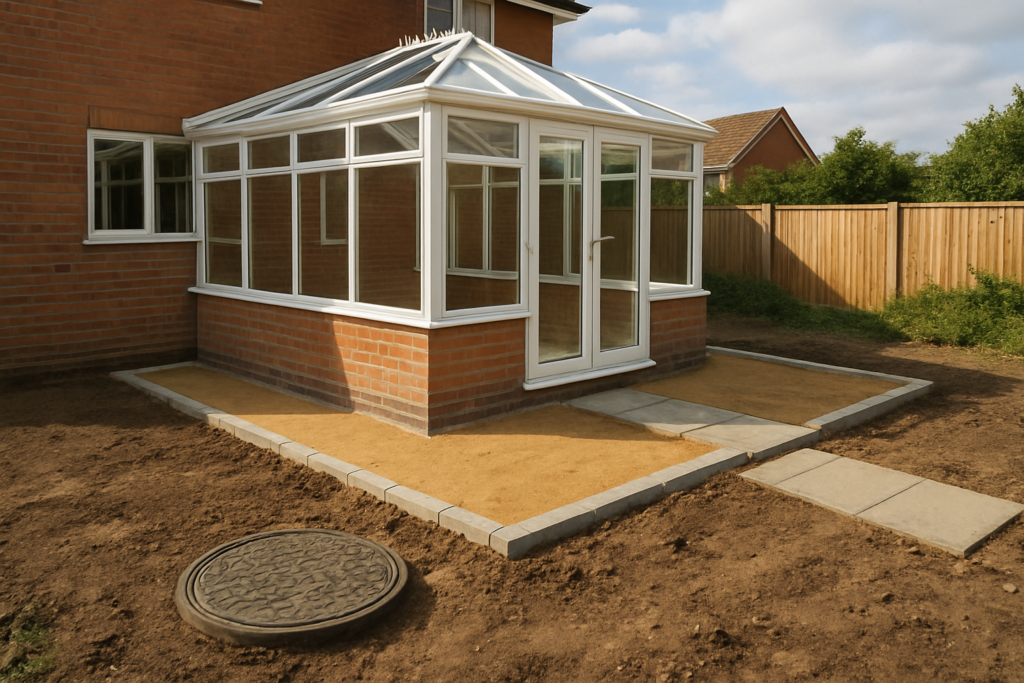
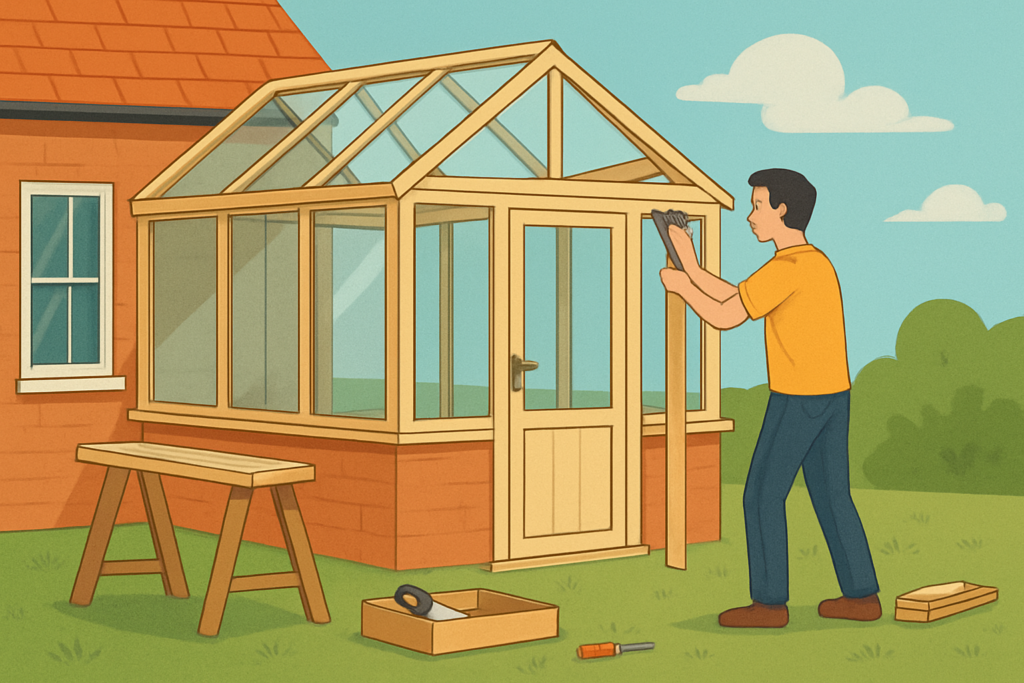
Adding a conservatory often starts with a simple idea. You want more space. You want more light. You want somewhere that feels open, calm, and connected to your garden. A conservatory seems like the perfect solution because it can transform how your home feels without the disruption of a full extension.
But before you start looking at designs, materials, or prices, one question usually comes first.
Do you need planning permission for a conservatory?
The answer is not always straightforward. Sometimes you do. Often you don’t. And in many cases, the details matter more than people expect.
If you understand the rules early, you avoid delays, avoid extra costs, and avoid the stress of changing plans halfway through. This guide walks you through everything in plain language so you can move forward with confidence.
Do Most Conservatories Need Planning Permission?
In many cases, you do not need planning permission for a conservatory. This is because conservatories often fall under something called permitted development rights.
Permitted development allows you to extend your home within certain limits without submitting a full planning application. The idea behind this is simple. Small, sensible changes to your home should not require a lengthy approval process.
If your conservatory meets the permitted development rules, you can usually go ahead without formal planning permission. This makes the process quicker and far less complicated.
However, these rights only apply if your conservatory stays within specific size, height, and location limits. If your plans go beyond those limits, you may need to apply for planning permission.
That is why it helps to understand the rules before you commit to a design.
What Size Conservatory Can You Build Without Planning Permission?
The size of your conservatory plays a major role in whether planning permission is required.
For most homes, permitted development allows you to build:
- Up to 3 metres from the rear of a terraced or semi-detached house
- Up to 4 metres from the rear of a detached house
These limits apply to standard permitted development. However, larger extensions may still be possible through something called prior approval.
Under larger home extension rules, you may be able to extend:
- Up to 6 metres for terraced or semi-detached houses
- Up to 8 metres for detached houses
This process still involves your local council, but it is usually simpler than full planning permission.
It is important to remember that these measurements start from the original rear wall of your home, not from any existing extension or conservatory already in place.
That detail often catches people out. You may assume you have more space available than you actually do.
Does the Height of a Conservatory Affect Planning Permission?
Yes, height matters just as much as size.
To remain within permitted development, your conservatory usually must not:
- Exceed 4 metres in height
- Be higher than the roof of your existing house
- Exceed 3 metres if within 2 metres of a boundary
These limits help protect neighbouring properties from overshadowing or loss of privacy.
If your design includes a taller roof, lantern roof, or raised base, you may move outside permitted development and need planning permission.
This is why even small design changes can affect whether permission is required.
Does Location on Your Property Matter?
Yes, where you build the conservatory makes a difference.
In most cases, you cannot build a conservatory in front of the main elevation of your home without planning permission. The main elevation usually means the front of your house that faces the road.
Rear and side conservatories are usually easier to build under permitted development rules.
However, side extensions often face additional restrictions. For example, a side conservatory usually must:
- Be single storey
- Be no wider than half the width of the original house
These limits exist to keep changes in proportion with neighbouring homes.
Do You Need Planning Permission for a Conservatory on a New Build?
New build properties often have different rules.
Many new homes come with permitted development rights removed or restricted. Developers sometimes do this to keep the estate consistent in appearance.
This means you may need planning permission even for a small conservatory.
You can usually check this by looking at your property deeds or contacting your local council.
If permitted development rights are removed, you will need planning permission before building.
Do You Need Planning Permission if You Live in a Conservation Area?
Yes, planning rules are often stricter in conservation areas.
If your home sits in a conservation area, national park, or area of outstanding natural beauty, permitted development rights may be limited.
This does not mean you cannot build a conservatory. It simply means you may need planning permission or may need to follow tighter restrictions.
Councils usually focus on:
- Visual impact
- Materials used
- Size and placement
- Effect on neighbouring properties
If your conservatory blends with the existing property and surrounding homes, approval is usually more straightforward.
Do You Need Planning Permission for a Conservatory on a Listed Building?
If your home is listed, you will almost always need permission.
Listed building consent is separate from planning permission. Even small changes often require approval because listed buildings carry historical or architectural importance.
You may still be able to add a conservatory, but the design must respect the character of the property.
This often means:
- Sympathetic materials
- Appropriate proportions
- Careful placement
It is always best to speak with your local council before planning a conservatory on a listed property.
Do Conservatories Need Building Regulations Approval?
Even if planning permission is not required, building regulations may still apply.
However, conservatories often fall outside full building regulations if they meet certain criteria.
Typically, a conservatory may be exempt if:
- It is separated from the house by external doors
- It has independent heating
- It is built at ground level
- It is under 30 square metres
If your conservatory connects fully to your home or removes external doors, building regulations approval may become necessary.
This detail often surprises homeowners. You may not need planning permission, but you may still need building regulations approval.
Why Do Many Conservatories Fall Under Permitted Development?
Conservatories often qualify because they are considered low-impact extensions.
They usually:
- Sit at the rear of the property
- Remain single storey
- Use lightweight materials
- Do not dominate neighbouring homes
Because of this, councils often allow conservatories under permitted development.
This makes conservatories one of the easiest ways to add space without complex planning requirements.
What Happens if You Build Without Planning Permission?
If you build a conservatory that requires planning permission but do not apply, your local council can take action.
This may include:
- Asking you to submit a retrospective application
- Requesting design changes
- Requiring removal in extreme cases
While enforcement is not always immediate, it can cause issues later. For example, when selling your home, solicitors often check planning compliance.
If documentation is missing, it can delay or even affect the sale.
That is why checking early saves stress later.
Do Neighbours Have a Say in Your Conservatory?
Under permitted development, neighbours usually do not have formal approval rights.
However, under larger extension rules, neighbours may be consulted through the prior approval process.
Even when formal consultation is not required, it often helps to speak with neighbours before building.
This avoids misunderstandings and helps keep things smooth during construction.
A quick conversation early often prevents problems later.
How Close Can a Conservatory Be to a Boundary?
You can usually build close to a boundary, but height limits apply.
If your conservatory sits within 2 metres of a boundary, the height usually must not exceed 3 metres.
This helps prevent overshadowing and maintains privacy.
If you plan to build taller, planning permission may be required.
Can You Replace an Existing Conservatory Without Planning Permission?
In many cases, yes.
If you replace an existing conservatory with something similar in size and position, planning permission is usually not required.
However, if you increase size or height, you may move outside permitted development.
It is always worth checking before replacing an older conservatory with a larger design.
Does the Type of Conservatory Affect Planning Permission?
Sometimes it does.
Different conservatory styles can affect height and footprint. For example:
- Lean-to conservatories often stay within limits
- Victorian conservatories may extend further
- Orangery designs may increase height
- Lantern roofs may raise overall height
These differences can influence whether planning permission is required.
That is why the design stage matters.
Why People Choose Conservatories Instead of Extensions
One of the biggest reasons people choose conservatories is simplicity.
A conservatory often means:
- Less disruption
- Faster installation
- Lower cost
- Fewer planning requirements
It also changes how your home feels. More light enters. Garden views open up. The space becomes flexible.
You might use the space for dining, relaxing, working, or family time.
That emotional benefit often drives the decision.
You are not just adding space. You are changing how your home feels every day.
How Long Does Planning Permission Take for a Conservatory?
If planning permission is required, most applications take around 8 weeks.
Prior approval applications often move faster.
Permitted development projects can begin sooner because formal approval is not required.
However, it is still wise to confirm your position before building.
How to Check if You Need Planning Permission
You can check in a few simple ways:
- Contact your local council
- Use planning portal guidance
- Speak with a conservatory specialist
- Request a lawful development certificate
A lawful development certificate is not required, but it gives written confirmation that your conservatory falls under permitted development.
This can be helpful when selling your home later.
Does a Conservatory Add Value to Your Home?
In many cases, yes.
A conservatory increases usable space, improves natural light, and enhances the overall feel of your home.
Buyers often see conservatories as flexible spaces. A dining room, playroom, or quiet retreat all become possible.
While value depends on size, design, and location, a well-built conservatory often improves appeal.
The benefit is not just financial. It is how the space improves daily life.
When Planning Permission Is More Likely
Planning permission is more likely if:
- The conservatory is very large
- The design is unusually tall
- The property is listed
- The home sits in a conservation area
- Permitted development rights are removed
- The conservatory sits at the front of the house
If none of these apply, planning permission is often not required.
Why Checking Early Makes Everything Easier
When you understand the rules early, everything becomes simpler.
You design within limits. You avoid redesigns. You avoid delays.
Most importantly, you move forward with confidence.
Building a conservatory should feel exciting, not stressful.
Knowing whether planning permission is required helps keep the process smooth.
Final Thoughts: Do You Need Planning Permission for a Conservatory?
In many cases, you do not need planning permission for a conservatory. Permitted development rules allow many homeowners to build without formal approval.
However, size, height, location, and property type all matter.
A quick check before you start protects your project and keeps everything moving in the right direction.
If you are considering a conservatory, the next step often involves understanding cost, size, and design options.
Planning early helps you choose the right conservatory for your home, your space, and how you want to live.
Because when you get it right, a conservatory does more than add space.
It changes how your home feels every single day.